Like the humans that make them, films yearn for identity and alignment within a community, and it is for this reason that they are readily associated with cultural, philosophical, thematic, and stylistic movements. Some movements begin after long and careful deliberations among the pioneers, while some others are galvanised in response to a pressing situation. In a 1969 publication by the Organization of Solidarity with the People of Asia, Africa and Latin America (OSPAAL) within which the Third Cinema concept was articulated, the movement was said to offer colonised people the great possibility of constructing a liberated personality with themselves as the starting point – in essence, the decolonization of culture.1
Unlike their western counterparts who could afford to make films for entertainment and commercial gain, the filmmakers within Africa around the 1960s and 1970s were united by the struggle to present the African experience, past and present, from a completely authentic perspective. While there were differences in plots, themes, and structure, the films made during that early period were part of a single postcolonial/decolonial movement. Such a task may have been daunting, but the filmmakers of that era realised that they were undertaking a sacred venture, meaning that recognition as an African filmmaker was not to be taken lightly.
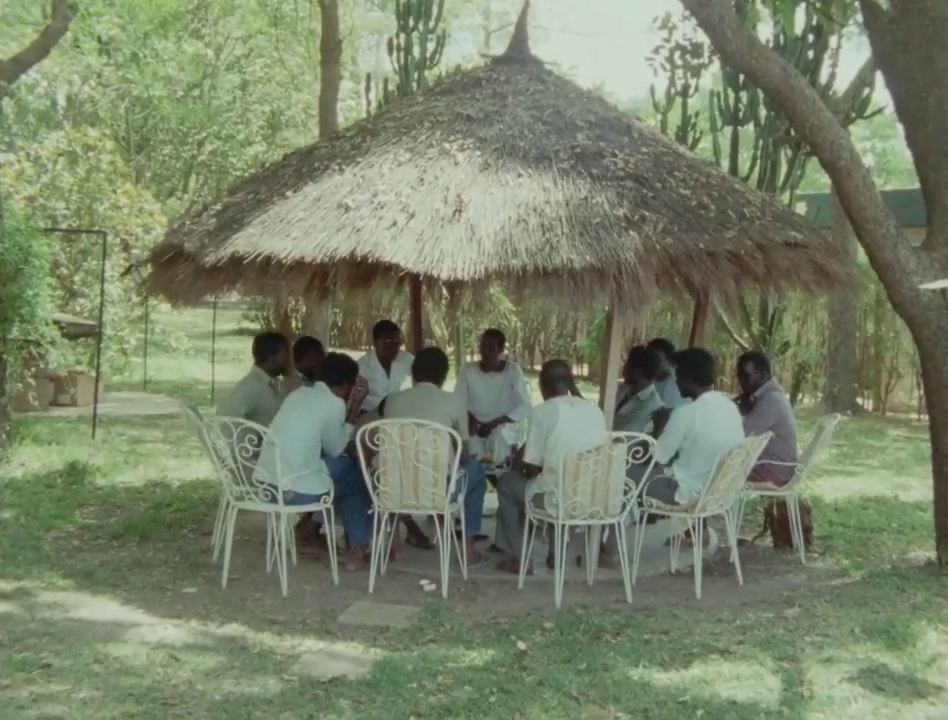
The identity of a filmmaker or film as African bestowed automatic qualification as a contributor to this important movement, but the particulars that made such an individual or film eligible for this recognition were not always clear cut. The recent history of the continent presented some complexities in identifying who or what was African, and these problems were reflected in its cinema.
Films made by Persons Born and/or Raised on the Continent
In the case of black people born and/or raised in Africa who made films within the continent, there is no controversy. No one in their right mind would question the status of the films of Dikongué Pipa or Ngangura as classics of the continent’s cinema.
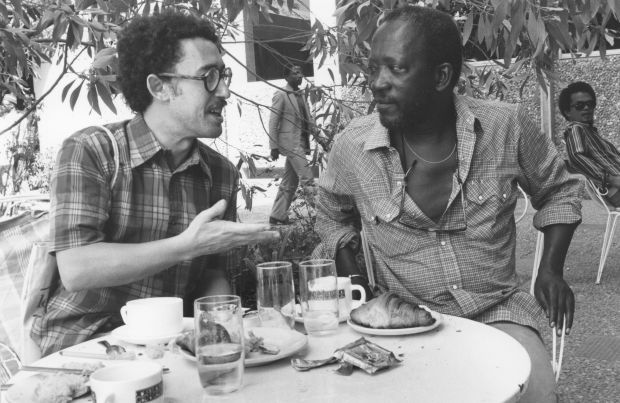
The case of people born and/or raised in North Africa who made films within that part of the continent should be the same as their sub-Saharan counterparts, but their identity as African filmmakers has been questioned on occasion. Many discussions about African films usually focus on features made by black filmmakers, with those made by North Africans being grouped as part of Arabian cinema. Africa is as much a geographical fact as it is a cultural identity, and the films of the likes of Chahine and Lakhdar-Hamina, are not just part of, but integral to, the continent’s rich cinematic history. In fact, Caméra d’Afrique (1983) made by Tunisian director, Férid Boughedir, remains one of the most robust documentaries on the early period of black African cinema.
Films made by Persons of African Ancestry Born and/or Raised Outside the Continent
The status of the African diaspora presents the most controversial aspect of this subject. At the 1991 Pan-African Film and Television Festival of Ouagadougou (FESPACO), a workshop for African women in film and television was organised, and while the opening session was open to all festival attendees, the workshop itself was strictly limited to ‘African women’. By the time the workshop was to begin, a call was made for non-African women to leave. All the men, both black and white, and all non-black women left, leaving only black women inside the hall. Surprisingly, the call was repeated, and it dawned on the black women from the diaspora that they were not considered African enough for the purposes of the workshop.2
The distinction between the cinema of Africa and that of the African diaspora did not just begin at that moment; FESPACO created the Paul Robeson Award for Best Film by a Director of the African Diaspora in 1987, and this meant that such films could not compete for the Golden Stallion (the main prize of the festival). While arguments may be made pointing out differences between the African experience and that of the diaspora, there is a fundamental connection that cannot be broken, neither by the passage of time nor by deliberate action.
People of African origin can make films that are African, regardless of where they were born or where they grew up. What matters in such cases is the intention behind, and the subject of, the film. A film made by an African American, for instance, would not be considered an African film if it does not possess a distinct African flavour. However, where the film is clearly meant to address a subject unique to the African experience, it cannot be disregarded just because the director was not born or did not grow up on the continent.
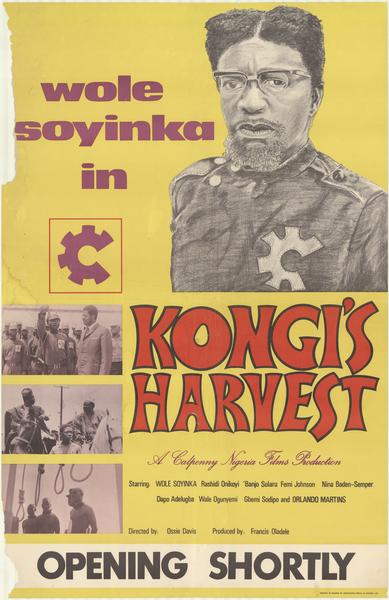
The case of the late great African American actor and director, Ossie Davis, is instructive on this point. In the 1970s, he made blaxploitation films like Cotton Comes to Harlem (1970) and Gordon’s War (1973), but his 1974 film Kongi’s Harvest, written by and starring the Nigerian Nobel laureate, Wole Soyinka, and shot in Nigeria is considered to be the first indigenous Nigerian film. The former two films may not be regarded as African (although they may be classics of African American cinema), but Kongi’s Harvest is undoubtedly a classic of African cinema.
The major difference between a filmmaker born and/or raised in Africa and a filmmaker from the diaspora, in my opinion, is that while the former may make films outside of the African experience and still be regarded as an African filmmaker, the latter may need to make films dealing directly with the African experience to be considered as such. These distinctions are of less importance in the current cinematic landscape, and in 2013, FESPACO announced that films from the diaspora were now eligible to compete for the Golden Stallion.
Films made by Persons of European Ancestry Born and/or Raised in the Continent
An equally controversial situation may be found in the case of African filmmakers of European ancestry. One does not need to embark on a journey tracing the recent history of the continent to establish that a bitter taste may still linger on the tongues of indigenous Africans, both home and abroad, as to the manner in which the continent’s European population came to be. Regardless, it cannot be denied that Africans of European ancestry have established strong roots within the continent, and while their African experience may be unique, it is still an African experience.
Some seminal works of African cinema, like the 1980 comedy The Gods must be Crazy (widely considered within the continent to be the one of the greatest African comedies, but not without its fair share of controversy and criticism) and Jit (1990) were directed by Africans of European ancestry.
Films made by Foreign Filmmakers
Foreign directors may also make films within the continent, but these films are usually not considered African. Such films date back to the end of the 19th century when short colonial films about the actualities in Africa were made.3 In 1913, Hans Hermann Schomburgk shot some films, including The White Goddess of Wangora, in the German West African colony of Togoland, and these films may very well have been the first fictional films shot within the sub-Saharan part of continent.4 These films, and the many that followed, focused on the western experience in Africa and portrayed Africans terribly, with the continent serving merely as an exotic backdrop for western entertainment.
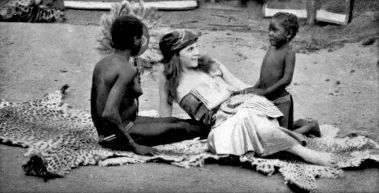
Eventually, some of these filmmakers began making films with genuine intentions towards the cultures and people of Africa. These began with ethnographic films, such as those by Jean Rouch, on the production of which many future stars of African filmmaking such as Ganda, Alassane, and Faye cut their teeth. Later, non-African directors began making fictional films of great importance to the continent.
A great example is Flame (1996). The film highlights the struggles of female guerrillas during the Rhodesian Bush Wars (1964-1979), and it was made by Ingrid Sinclair, an English filmmaker who moved to Zimbabwe in the 1980s. Although Sinclair had to leave Zimbabwe after the racial tensions of the early 21st century, she continues to champion African cinema through the Afrika Eye Film Festival held annually in Bristol which she founded. The films of Sinclair and other similar efforts may constitute an exception: a situation where authentic African films are made by non-Africans.
Conclusion
An African film, therefore, is more of a question of substance, rather than form. As for the filmmaker, in many cases, it is a question of personal identity which can only be answered after sincere internal deliberations between such a person’s experiences and consciousness.
Thoughts and opinions are welcome in the comment section below.
References
- Getino, O. and Solanas, F., 1997. Some Notes on the Concept of a Third Cinema. New Latin American Cinema, 1. ↩︎
- https://medium.com/womens-film-activism/beti-ellerson-of-african-women-in-cinema-25ae28a3f8e3 ↩︎
- Roberts, A.D., 1987. Africa on Film to 1940. History in Africa, 14, pp.189-227. ↩︎
- Gehrts, M., 1915. A Camera Actress in the Wilds of Togoland: The Adventures, Observations & Experiences of a Cinematograph Actress in West African Forests Whilst Collecting Films Depicting Native Life and when Posing as the White Woman in Anglo-African Cinematograph Dramas. Seeley, Service & Company limited. ↩︎

